

Last Updated on: 23rd July 2025, 10:54 am
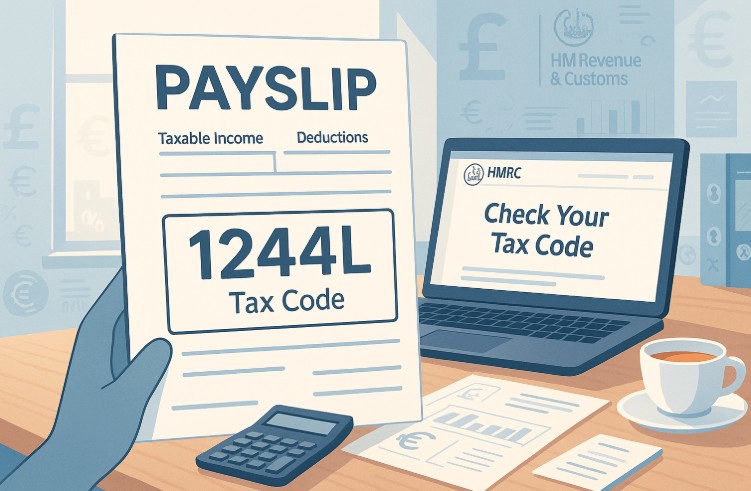
Have you ever looked at your payslip and wondered what the 1244L tax code actually means? You’re not alone. Many UK taxpayers notice a change in their tax code without fully understanding how it affects their income.
Tax codes like 1244L are more than just numbers and letters, they determine how much of your earnings is taxed and how much you take home. While most employees are familiar with the standard 1257L code, seeing a slightly different one can raise questions.
Is it correct? Has HMRC made an adjustment? Could you be paying too much or too little tax? In this blog, we’ll break down what the 1244L tax code means, when it’s used, how it impacts your pay, and what to do if you think something isn’t right. Let’s clear up the confusion.
What Does The 1244L Tax Code Represent?
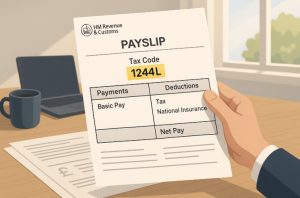
The 1244L tax code is made up of numbers and a letter. The numbers show how much income you can earn before income tax is deducted.
To calculate this, multiply the number by 10. In this case, 1244 × 10 = £12,440. This is your personal allowance, which is the amount of income you can earn tax-free during the 2025 to 2026 tax year. The letter “L” means you are entitled to the standard personal allowance.
This is typically used for individuals with one job and no additional taxable benefits or unpaid tax from previous years. HMRC assigns this code when your records show you qualify for the standard personal tax-free threshold.
How Does The UK Tax Code System Work?
The PAYE (Pay As You Earn) system uses tax codes to determine how much tax should be deducted from your income each pay period. Your employer enters your tax code into their payroll software which then calculates your tax obligations.
HMRC provides tax codes to employers and pension providers through a coding notice.
These notices are issued when:
- You start a new job or pension
- Your income or tax circumstances change
- You claim tax reliefs or deductions
Each code reflects your personal allowance, any owed tax from previous years, and whether you receive taxable state benefits.
Which Types Of Income Are Affected By The 1244L Tax Code?
The 1244L tax code is most commonly applied to the following income types:
- Wages or salary from your main job
- Company pension schemes
- Private pensions
In some cases, it may also apply to job-related benefits like bonuses or commissions, provided there are no complicating factors like untaxed income or benefits in kind.
If you receive income from a second job, freelance work, or investments, a different code such as BR or 0T may apply to those earnings.
Why Have You Been Given A 1244L Tax Code?
This tax code is generally assigned by HMRC when you meet the following criteria:
- You have one main source of employment or pension
- You do not receive any taxable benefits like a company car or accommodation
- You do not owe any back taxes
- You have not transferred any of your personal allowance to a partner
In essence, the 1244L tax code represents a clean, straightforward tax situation. However, if your personal allowance has been slightly reduced due to small tax debts or benefits adjustments, you may be given 1244L instead of the standard 1257L.
Is The 1244L Tax Code An Emergency Code
The 1244L tax code is only considered an emergency code when it is followed by the suffix W1, M1, or X.
- W1: Week 1 basis, used when you are paid weekly
- M1: Month 1 basis, used for monthly payroll
- X: Applied when your pay frequency is not fixed
Emergency tax codes are temporary and applied when HMRC has not received complete information about your income. This could occur if you:
- Start a new job without a P45
- Begin work after being self-employed
- Start receiving a new benefit like the State Pension
Emergency codes result in tax being calculated based only on your current pay period, not cumulative income.
How Does The 1244L Tax Code Impact Your Pay?
Your tax code directly influences how much tax you pay on your income. A higher number in your tax code means a higher personal allowance, and therefore less tax.
Here is a table to show how different tax codes affect take-home pay:
| Tax Code | Tax-Free Income | Approx. Monthly Tax-Free Income | Used For |
| 1257L | £12,570 | £1,047.50 | Most UK employees (standard) |
| 1244L | £12,440 | £1,036.67 | Employees with minor deductions |
| 1000L | £10,000 | £833.33 | Lower allowance due to benefits |
| BR | £0 | £0 | Second jobs or pensions |
A slight reduction in the personal allowance, as seen with the 1244L code, leads to a marginal increase in tax deducted. The difference is not drastic but could become noticeable over the course of a year.
How Can You Check If Your Tax Code Is Correct?
You can verify your tax code using the HMRC online tax account service.
This service allows you to:
- View your current and previous tax codes
- Check your income and tax paid
- Update your employment and income details
HMRC may assign the wrong tax code if:
- They do not have up-to-date information
- Your job situation has recently changed
- You have multiple sources of income or taxable benefits
If your payslip shows a tax code that seems unfamiliar or leads to a larger-than-expected deduction, it’s worth investigating.
How Can You Update Your Tax Code?
If your tax code is incorrect or out of date, you should act promptly to avoid overpaying or underpaying tax. The process involves updating HMRC with accurate information.
Here are the steps:
- Log into your Personal Tax Account on the HMRC website.
- Check your current tax code and income details.
- Update your employment status, benefits, or expected income.
- Wait for HMRC to assess the new details.
- Receive your new tax code, which HMRC will also send to your employer.
- Review your next payslip to confirm adjustments have been made.
You can also contact HMRC by phone if you are unable to use the online service. Your employer cannot change your tax code manually; they must follow HMRC’s coding notice.
What Are Other Common Tax Codes In The UK?
Understanding how the 1244L tax code compares to others can help you understand your tax position better.
Below is a comparison table of commonly used codes:
| Tax Code | What It Means | Typical Use Case |
| 1257L | Standard personal allowance of £12,570 | Most UK workers with no complications |
| 1244L | Slightly reduced personal allowance | Small adjustment for minor owed tax or benefits |
| BR | No personal allowance, all income taxed at basic rate | Second job or pension |
| 0T | No allowance given, tax on all income at appropriate rate | Missing information or used allowance |
| D0 | Income taxed at higher rate only | Second job or additional income |
| K | Negative allowance due to owed tax or benefits over allowance | Used to recover previous underpaid tax |
Knowing what these codes mean can help you identify whether you’ve been assigned the correct one. For example, BR and 0T may indicate that HMRC does not have enough data about your current employment.
What Happens If Your Tax Code Changes Mid-Year?
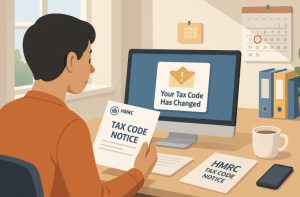
Your tax code can change during the tax year due to:
- Starting or ending benefits like a company car
- A change in salary or pension
- An underpayment or overpayment from previous years
HMRC will issue a tax code notice, also known as a P6 form, which is sent to your employer.
This notice will contain:
- Your new tax code
- Whether previous earnings and tax are included
- Instructions for applying the new code
Your employer must apply the new tax code before your next pay date. If the update arrives too late in the tax year, the change may carry over to the next year starting from 6 April.
Conclusion
Understanding your 1244L tax code is essential for staying on top of your finances and ensuring you’re taxed correctly. While it might only differ slightly from the standard 1257L code, that small change could be due to minor adjustments by HMRC, like unpaid tax, estimated benefits, or other income changes.
By checking your tax code regularly through HMRC’s online services and reviewing your payslips, you can catch errors early and avoid overpaying or underpaying tax.
If something doesn’t seem right, it’s easy to take action, update your details, contact HMRC, or speak with your employer’s payroll team.
Your tax code directly affects your take-home pay, so don’t ignore it. A few minutes of checking could save you a significant amount over the year. Stay informed, stay accurate, and take control of your tax status today.
FAQs
What does the L in the 1244L tax code stand for?
The L means you’re eligible for the standard Personal Allowance, allowing you to earn a set amount tax-free.
Why is my tax code 1244L and not 1257L?
You may have slightly less personal allowance than the standard. This could be due to unpaid tax, benefits, or HMRC adjustments.
Can I be on a 1244L tax code and still get a tax refund?
Yes. If too much tax was deducted based on incorrect income estimates, you may receive a refund from HMRC.
How do I fix an incorrect 1244L tax code?
Use the HMRC online tax service to update your income or employment details, or contact them directly.
Does 1244L mean I’m on an emergency tax code?
Not unless it ends in W1, M1 or X. These indicate an emergency tax status, which is temporary.
What happens if my tax code changes during the year?
Your employer updates it via HMRC’s notice. Your next payslip will reflect the change and any adjustments.
Can I challenge a 1244L tax code if I think it’s wrong?
Absolutely. You can query it via HMRC’s online portal or by calling their helpline. Employers can’t change your code directly.















No Comments
Leave a comment Cancel